
- Nubaira Ahmer khan
- 2022/12/21
- 0 Comments
- 0 Likes
Do you know that 40% of the food in restaurants gets wasted on a daily or weekly basis? This is such a huge amount of food waste that it can be considered more than enough to feed the people who are malnourished.
As food waste in restaurants is a common problem, digital innovation offers a variety of solutions to reduce food waste.
If you are thinking about what the important solutions to food waste are and what the emerging technologies that reduce food waste are, then this blog will answer all your questions and surprise you with information you haven't heard before.
Emerging Technologies That Reduce Food Waste
Regarding the massive amounts of waste that are on the rise, there are numerous solutions available to address this issue and reduce food waste, such as multiple appliances, tracking apps, and technologically advanced equipment.
The emerging technologies are the practical examples of this phenomenon that are given below:
Smart Fridges
One of the most intriguing technologies to think about in 2023 or later is the "smart fridge," which is a highly programmed refrigerator with an internal artificial intelligence that keeps track of food and its expiration date to reduce the risk of food spoilage.
Smart fridges are energy efficient and reduce electricity consumption, resulting in lower bills. They are highly innovative in nature and encourage you to plan everything creatively, create grocery lists, and keep track of everything.
Smart refrigerators are amazing because they typically have a touch screen interface and can easily connect to Wi-Fi, and there are numerous mobile apps that can easily operate smart refrigerators.
while the internal cameras, flexible user control options, and energy-saving capabilities make it easier to consider food waste reduction technology.
Read
How To Grow Your Restaurants Online Food Delivery Sales And Customers?
How Does the Delivery-Provider Marketplace Create a Win-To-Win Situation?
Food Waste Prevention Apps
With the advancement of technology, there are many food waste apps that are significantly contributing, such as Too Good to Go, the app that connect customers and vendors and contribute in food waste reduction.
Different restaurants are registered on this app to sell the wasted food at a lower cost at the end of the day, on a daily basis. Food Cloud is also an app that works the same way, contributing to providing food to billions of hungry people and reducing food waste.
Apps that offer meal planning tools, recipe recommendations, expiration date alerts, and waste minimization advice can help restaurants cut down on food waste. such as a point-of-sale app that monitors inventory and prevents food waste.
Food Waste Recycling Technologies
Food waste recycling technologies are the solution to food waste. It involves the process through which food waste can be turned into feed, fertilizer, and other products using technologies like thermal hydrolysis and hydrothermal processing.
For instance, in thermal hydrolysis, the food waste is processed by high-pressure boiling, which leads to rapid decomposition. These decomposing food wastes are frequently used to generate electricity.
At the same time, there is an interesting app known as MyFoodways that provides recommended recipes based on the food that is present in your refrigerator so that you can recreate something interesting from it instead of wasting it.
Read
Innovative Restaurant Customer Service Techniques To Win Customers Over
What Are The Four Essential Features Your Grocery E-Commerce Website Needs?
Biodegradable Packaging
Biodegradable packaging is also one of the top things that reduces product waste. It generally consists of packaging that is created from a material that naturally disintegrates or decomposes.
Examples of biodegradable packaging materials that can help lower the amount of non-biodegradable waste produced from food packaging include paper and plant-based plastics.
Similarly, there is a Bin-e, which is a smart dustbin that uses IoT technology to improve waste management by sorting all the waste based on its recognized category and thus improving the recycling of waste material.
Point Of Sale Software Technology
One of the most important technologies in restaurants is the point of sale, which is software technology that keeps track of every minor or major detail in a restaurant and ultimately saves food from wastage. It keeps track of inventory, orders, required quantity, menus, and many other things.
The POS software not only oversees inventory but manages whole restaurant operations because it is an all-in-one tool that has the capacity to keep everything on point. Thus, POS software is a top tool for preventing food waste in restaurants.
It retains artificial intelligence that forecasts the quantity of food that a restaurant requires at the same time that it generates weekly, monthly, or daily reports for restaurant kitchen staff. Also, the staff can manage ingredients as well with POS software technology.
Read
The Benefits of AI in Manufacturing Businesses
6 Key Retail Industry Technology Tools You Might Not Aware With
Practical Steps to Reduce Food Waste in a Restaurant
Technology can help, but waste reduction starts with basic habits. These practices work in any kitchen, large or small, and make any tool you adopt more effective.
Measure Before You Change Anything
For a week or two, record what is thrown away: the item, the quantity and the reason, such as spoilage, over-preparation, plate waste or kitchen mistakes. Patterns usually appear quickly. You may find that the same item is discarded each week, or that waste peaks on certain days.
Core Habits
- First in, first out: Label deliveries with dates and use older stock first.
- Count regularly: Check stock on a schedule, daily for fresh items and weekly for dry goods.
- Order based on sales: Look at past sales for the same day and season before placing supplier orders.
- Right-size portions: If customers regularly leave food, reduce portions or offer smaller sizes.
- Prepare in batches: Cook popular items in smaller batches through the day instead of making everything at once.
Use the Whole Ingredient
Vegetable trimmings can go into stocks, stale bread can become croutons or pudding, and leftover rice can be used in fried rice. Plan menu items that share ingredients, so that a single purchase can be used in several dishes.
Storage and Safety
Keep refrigerators and freezers at proper temperatures, check door seals, and store raw and cooked foods separately. Good storage extends shelf life and prevents spoilage. Safety comes first: never serve food that has been kept unsafely just to avoid waste.
Using Your Tools Well
A POS or inventory system can show sales by item and flag low stock, which supports better ordering. Whatever tool you choose, its value depends on accurate data. Enter deliveries on time, record wastage honestly and review the reports each week.
Track Progress
Compare your waste log month to month. Share results with your team and involve them in suggesting fixes, since the people closest to the food often see the causes first.
Recent Blogs

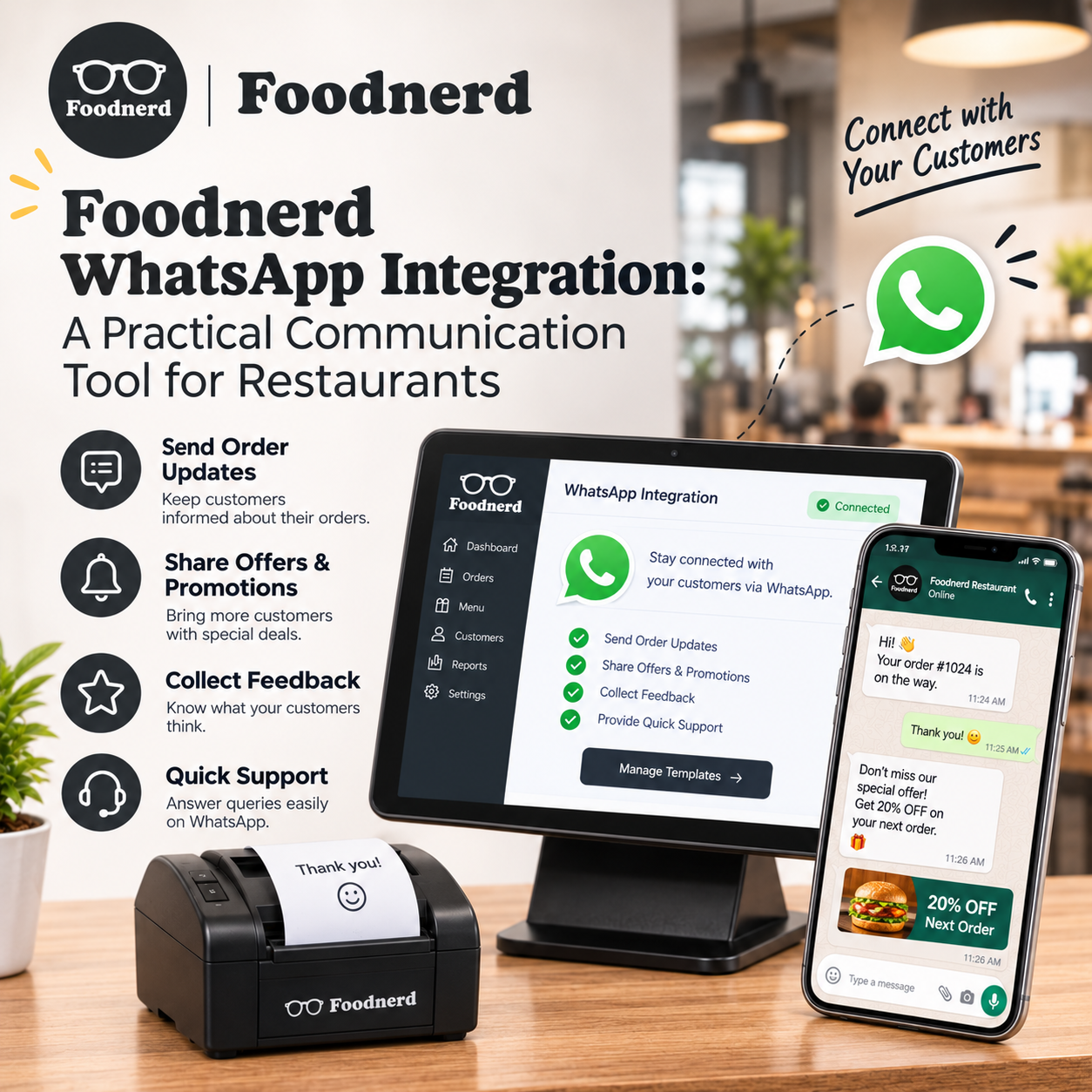
Foodnerd WhatsApp Integration: A Practical Communication Tool for Restaurants
Customers often reach out with a quick question: Has my order been accepted? Can I change a detail? Where should I send a document or photo? When those conversations are spread across personal phon...
Join the conversation
Comments are reviewed before they appear.
